Kihon
The basics: stances, blocks, strikes, punches and kicks drilled until they are structurally correct and repeatable under pressure.
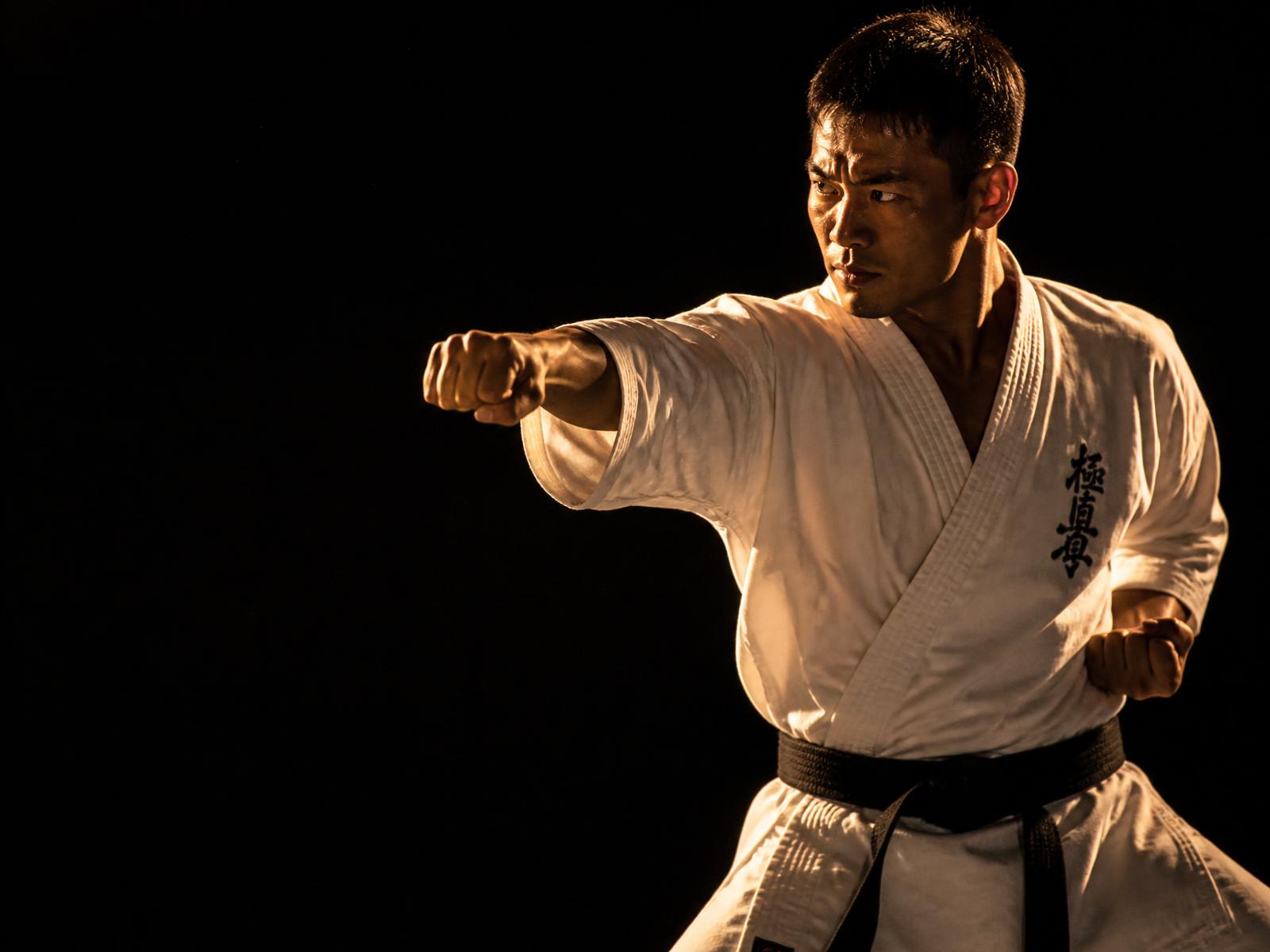
Est. in the Funakoshi lineage · Now online
We are a Silicon Valley-based Shotokan dojo that has been training together for decades. We now meet live on Zoom three times a week, so karateka anywhere in the world can train with our experienced senseis — all you need is a connection and class times in Pacific Time (UTC−7 / UTC−8) that work for you.
Welcome
We are a Silicon Valley-based dojo whose karateka have been training together for decades. Formerly located in downtown Los Altos, California, we now meet online via Zoom. A team of highly experienced senseis teaches three times weekly; sessions are 45 minutes, small enough that every student gets corrections by name.
If you have been searching for Shotokan karate classes near you, an online karate class you can take from home, or a way to learn karate remotely with live instruction rather than videos, this dojo was built for exactly that. Because every class is on Zoom, “near me” is anywhere with an internet connection — our karateka train from their living rooms, garages and gardens across the world.
Shotokan (松濤館 Shōtōkan) is a style of karate developed from various martial arts by Gichin Funakoshi (1868–1957) and his son Gigo (Yoshitaka) Funakoshi (1906–1945). Gichin was born in Okinawa and is widely credited with popularising "karate do" through public demonstrations and by building university karate clubs at Keio, Waseda, Hitotsubashi, Takushoku, Chuo, Gakushuin and Hosei.
After Funakoshi's death in 1957, his students carried the art forward. Internal disagreements — in particular the view that competition runs contrary to the essence of karate — led to separate organisations, beginning with the split between the Japan Karate Association under Masatoshi Nakayama and the Shotokai under Motonobu Hironishi and Shigeru Egami. There is no single "Shotokan school" today, but all bear Funakoshi's influence. As the largest school, Shotokan remains the most traditional and influential form of karate-do.
Contact
Interested in joining, or returning to training after a break? Send a note about your experience and a sensei will reply with a Zoom link.
info@pacificcoastkaratedo.comThe three pillars
The basics: stances, blocks, strikes, punches and kicks drilled until they are structurally correct and repeatable under pressure.
Prescribed sequences of 20 to 65 movements — from Taikyoku and Heian through Bassai Dai, Empi and Unsu — that carry the style's technical library.
Partner work, from controlled ippon kumite to free sparring drills, where distance, timing and intention are tested.
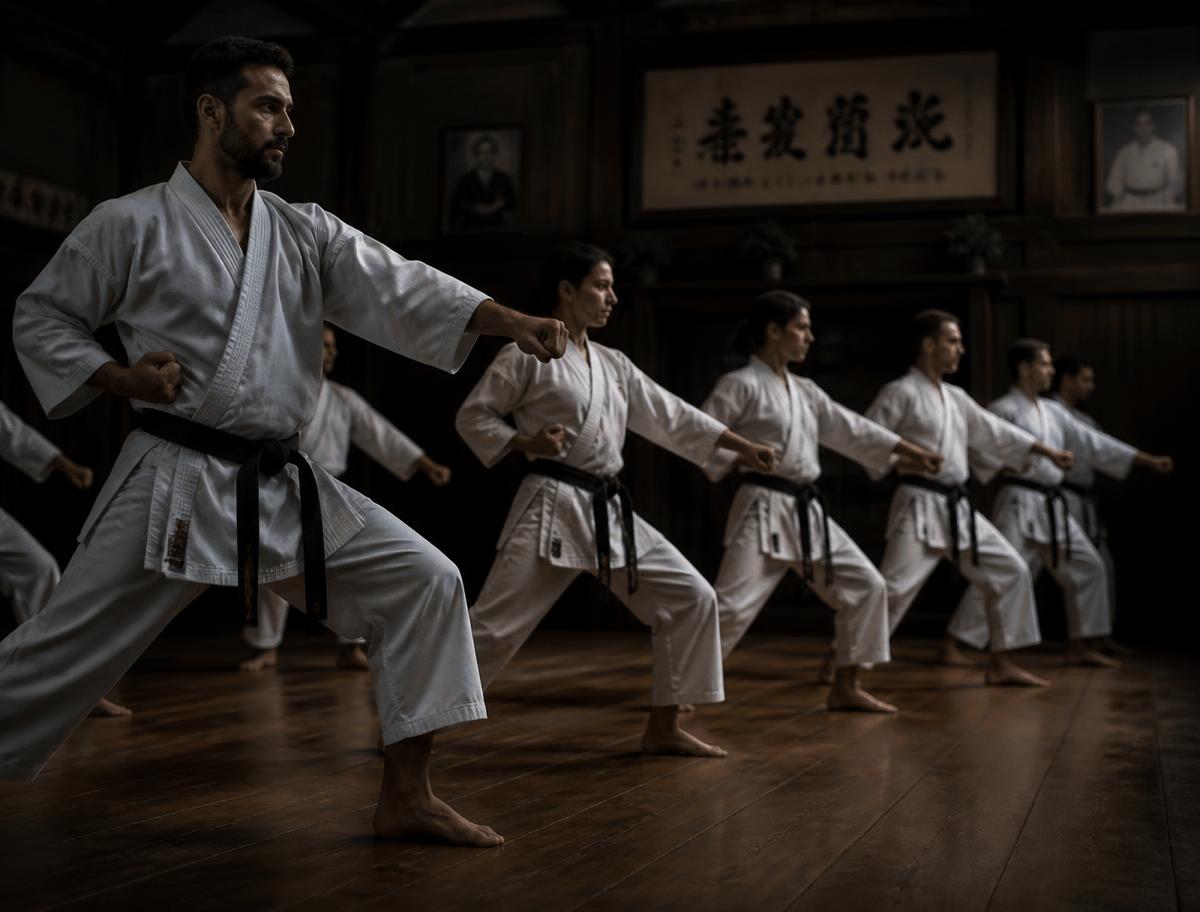
Weekly training
Fees: $10 per session or $80 per month. No contract.
Full schedule & detailsCommon questions
We teach Shotokan karate-do (松濤館), the traditional style developed by Gichin Funakoshi and his son Yoshitaka (Gigo) Funakoshi. Training follows the classical three pillars: kihon (basics), kata (forms) and kumite (partner work).
Pacific Coast Karate Do is a Silicon Valley-based dojo whose karateka have been training together for decades. We were formerly located in downtown Los Altos, California, and now meet online via Zoom so students can train with our senseis from anywhere in the world.
Classes run three times per week on Zoom: Mondays and Wednesdays from 6:00 to 6:45 PM Pacific Time (UTC−7 during daylight saving, UTC−8 otherwise), and Fridays from 5:00 to 5:45 PM Pacific Time (UTC−7 / UTC−8).
Yes. Every class is held live on Zoom and karateka from anywhere in the world are welcome, provided the Pacific Time class times work for you. Monday and Wednesday classes start at 6:00 PM Pacific (01:00 UTC the next day in summer, 02:00 UTC in winter) and Friday classes start at 5:00 PM Pacific (00:00 UTC in summer, 01:00 UTC in winter).
Our senseis are Rick Roberts and Mark Bailey, both Yondan (4th dan) black belts awarded by Irv Ploke Sensei of Pacific Coast Karate Do, joined regularly by visiting Sensei Mark Wright, Godan (5th dan). Between them they have well over a century of Shotokan training and teaching experience.
Yes. All of our classes are live on Zoom — not pre-recorded videos — so a sensei watches you train and gives corrections by name in real time. You need a device with a camera, about 2–3 metres of clear floor space, and comfortable clothing or a gi. Many of our karateka have trained this way from home for years.
If you are in Silicon Valley or the wider Bay Area, we are your local Shotokan club — formerly of downtown Los Altos, with summer outdoor sessions in Jollyman Park, Cupertino. And because every class is held live on Zoom, we are also 'near' anyone with an internet connection: students join us remotely from anywhere in the world, provided the Pacific Time class times suit them.
Training is $10 per session, or $80 per month for unlimited classes. There is no long-term contract and no registration fee.
No. Complete beginners are welcome and start with Taikyoku and Heian kata alongside basic stances, blocks, punches and kicks. Experienced karateka from other dojos are equally welcome to train with us.
A device with a camera positioned so the sensei can see most of your body, about 2–3 metres of clear floor space in each direction, and comfortable clothing or a gi. Bare feet are optional depending on your training surface, and a recovery drink afterwards is recommended.
Yes. Our members range widely in age and several have trained for more than twenty years. Shotokan builds strength, stamina, balance, flexibility and focus, and each class is scaled to the individual.
Email info@pacificcoastkaratedo.com with a short note about your experience level. A sensei will reply with the Zoom link and details for your first class.